Control what your 3D objects reflect.
Create reflective metal, glossy surfaces and mirrored details with your agent. Adjust roughness, surrounding objects and lighting in an editable Tesseract scene.
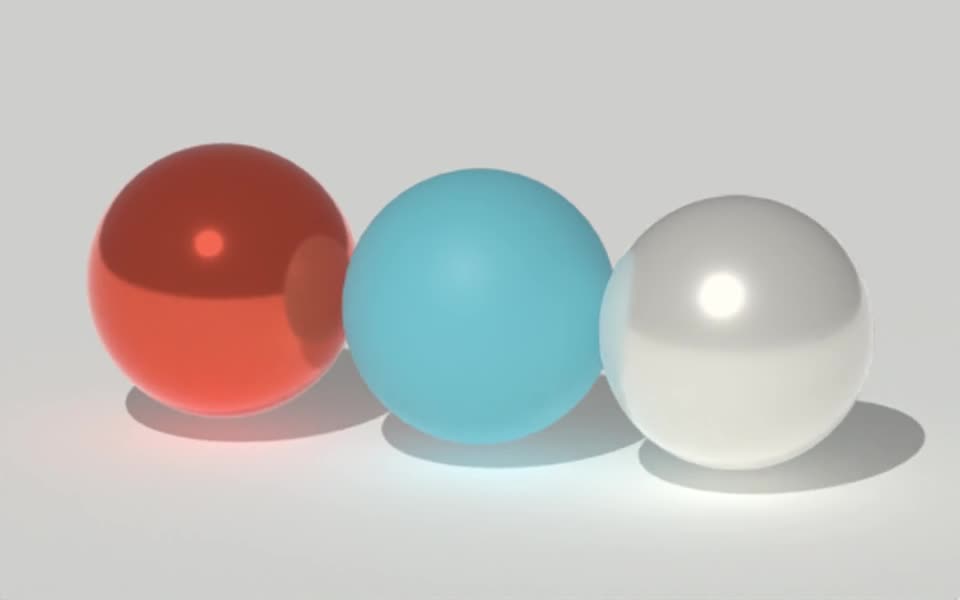
Rendered in Tesseract with path tracing at 32 samples per pixel. Download the editable project to revise the scene.
Give your agent this .tsrct file, then ask for a specific change.
Try it in your agent.
Use this prompt as a starting point. Review the result, then ask for the details you want to change.
A prompt to start from
Build a six-second Tesseract product turntable with a polished-metal object above a dark surface. Use broad lights to make the form readable. Show me a path-traced preview before the full render. Save the project. Then make the reflection softer by changing roughness only; preserve the camera, object shape and timing.
New to Tesseract? Find the setup for your agent.
Keep control of the result.
- Surface roughness
- Move between sharp reflections and a softer reflected image.
- Lighting and environment
- Place lights and surrounding surfaces to shape readable highlights.
- Reflection probes
- Use local reflection probes for supported raster scenes.
- Camera angle
- Review reflections across the full camera move, including the edges of the object.
A few useful details.
Are raster and path-traced reflections identical?
No. Raster rendering uses approximations such as reflection probes; path tracing evaluates reflected light paths. Review the scene with the renderer you intend to use for delivery.
Can I change reflections without changing the model?
Yes. Changing roughness, light placement or the environment can alter the reflected image while preserving the geometry.
Will 2D footage behind a 3D layer appear in its reflections?
A separate flat layer is not automatically part of the 3D scene. To interact physically, the content needs to be represented by a supported scene texture, environment or surface.
How do I try this with my agent?
Install or update Tesseract in a supported agent, attach your source files, and copy the prompt. Review the preview, then ask for the changes you want. The composition stays editable as you refine it.
Where does the video render?
Tesseract renders in the environment where your agent runs it, including supported local computers and hosted Linux environments. The engine is free; your agent’s subscription or usage costs are separate.
Put it to work in a project.
See how this tool fits into a complete, editable project.
Try these next.


Your next creative project, made with your agent.
Install Tesseract in your agent, bring a brief, and start creating.
Free on Mac, Windows, and Linux. Your agent’s costs are separate.
Read the prompt
Set up Tesseract by Mirage so you can create editable designs and 3D scenes, edit videos, and make motion graphics in this agent’s environment. Read https://github.com/mirage-hq/Tesseract and check the requirements for this local or hosted environment. If it is supported, follow the official plugin or skills installation guide, use its required runtime version, verify the download checksum, and confirm a short preview renders correctly. Then ask what I want to make and which brand references or source assets I have. Keep the editable project and source assets with the finished render.