Scene playback speed.
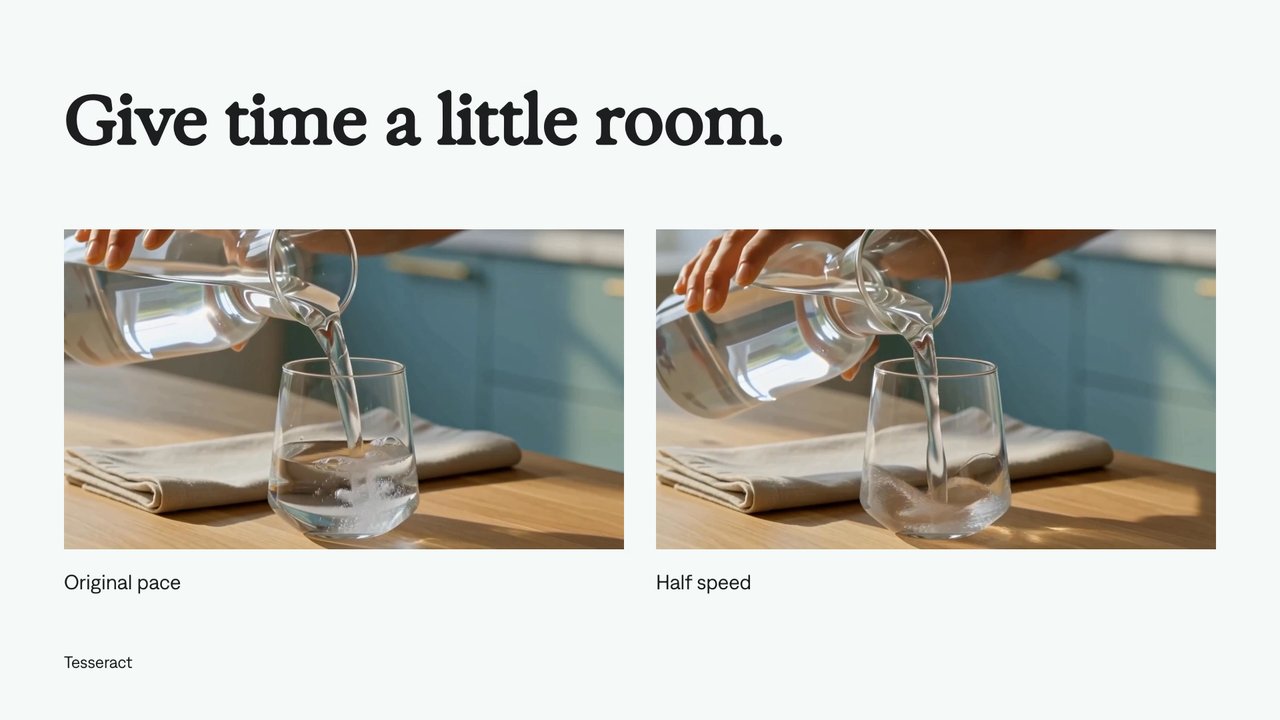
Speed up or slow down the contents of a group together.
Try it in your agent.
Use this prompt as a starting point. Review the result, then ask for the details you want to change.
A prompt to start from
Use Tesseract. Create an eight-second Tesseract kinetic sculpture study on Mirage Bone. Set “One scene. Two tempos.” as a generous Exposure[-30] headline. Below it, place two matching mobiles made from three rounded Sea, Cloud and Meadow bars; each bar sways and rotates with a slightly offset rhythm. Keep every mobile as an editable group. Play the left group at its original clock rate and the right at half speed using group playback, preserving identical child animation expressions. Use small Denim INK labels under the mobiles. Keep all motion within the generous blank space and verify that one group clock setting changes every child together.
Tesseract plugins and runtime downloads are coming soon.
A few useful details.
Does changing scene speed handle every audio effect?
Use supported positive playback rates for audio. Refine the visual timing and review the sound separately.
How do I try this with my agent?
Tesseract plugins and runtime downloads are coming soon. Save the sample prompt for launch. Once Tesseract is installed, your local agent can use it to create, preview, and refine an editable project.
Where does the video render?
Tesseract previews and renders locally on a Mac. The local engine is free; your agent’s subscription or usage costs are separate.
Try these next.
Your next video, made with your agent.
Professional tools for editing footage, creating motion graphics, and shaping sound.
Free on your Mac. Your agent’s costs are separate.